
Trapped in the Cove: Inside Taiji’s Dolphin Slaughter

By Julia Kuczynski
2/7/26
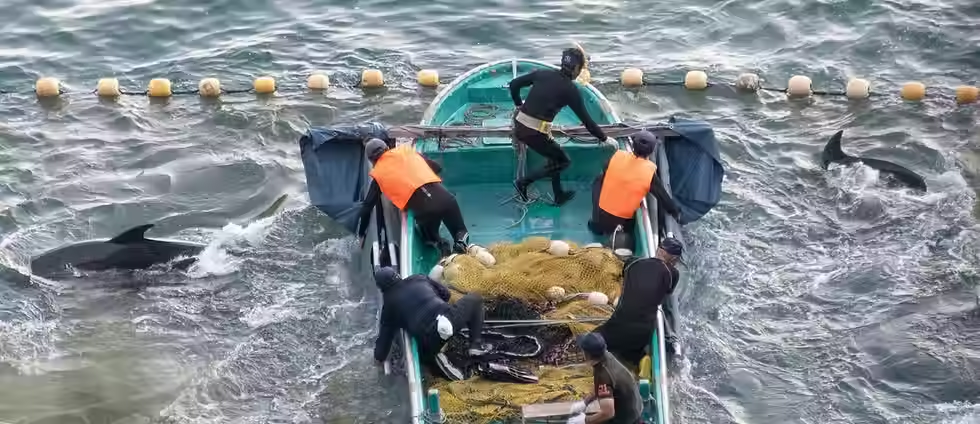
In the small coastal town of Taiji, Japan, a stretch of shoreline known as the Cove has become infamous for an annual event that draws global attention: dolphin drives. Each year, fishermen push pods of dolphins, both adults and calves, into the shallow, narrow inlet. Some are selected for live capture and sold to marine parks, while many others are killed. While media coverage often highlights the mechanics of the hunt, the real focus should be on the dolphins themselves. These are highly intelligent, social animals with complex emotional lives, making their cruel removal from the wild especially significant.
Kindred Spirits of the Sea
Dolphins are extraordinary among ocean animals. They have large, intricate brains and display behaviors that suggest advanced intelligence. They communicate with a variety of clicks, whistles, and body movements, and they often cooperate in problem-solving and hunting. They form long-term bonds with other members of their pod, remembering individuals over years, sometimes decades.
These traits make dolphins feel familiar to humans. Observing their social behavior can create an emotional connection, a sense that they have personalities, relationships, and awareness not unlike our own. This is why many people around the world find the Taiji hunts so troubling: these aren’t animals that live in isolation or react purely by instinct, but instead they are sentient beings with social and emotional depth.

Behind the Drive
The Taiji dolphin drive is methodical. Boats surround a pod at sea, using sound and coordinated movement to push the animals toward the cove. Once confined, a small number are chosen for live capture and eventually sold to aquariums or marine parks worldwide. The majority are brutally slaughtered, collected, and then removed from the water for processing.
The 2009 documentary The Cove, directed by Louie Psihoyos and featuring dolphin advocate Ric O’Barry, brought unprecedented international attention to the hunts. Using hidden cameras, infrared lenses, and underwater microphones, the filmmakers recorded aspects of the drives that were previously invisible to outsiders. By doing so, this documentary helped millions of viewers understand the scale of the hunts and the secrecy surrounding them.
Why Many Say It’s Wrong
Critics argue that the Taiji hunts are ethically problematic for several reasons. Dolphins are not just another fish in the sea. They are mammals with social structures, long-term memory, and emotional bonds. Separating them from their pods can cause real disruption and distress. Even those dolphins taken alive face an uncertain future in captivity, where their social networks are disrupted, and their lives are drastically different from the open ocean.
The economic aspects of the hunt amplify these concerns. The sale of live dolphins to aquariums creates a strong financial incentive, shifting the focus from local subsistence to profit-driven removal of wildlife. Critics also point to health concerns: tests have shown that dolphin meat can contain high levels of mercury, which has toxic implications for both human consumers and ecological balance. Together, these factors contribute to the view that the hunts are less a cultural practice and more a preventable harm inflicted on highly intelligent mammals.
The Emotional Connection
One of the most powerful reasons people oppose the Taiji hunts is the way dolphins remind us of ourselves. Watching them interact, care for one another, and explore their environment evokes empathy. Their social bonds, playful behavior, and visible curiosity create a sense of kinship. For many observers, it’s impossible to think of these creatures purely as resources, because they are beings capable of joy, grief, and recognition.
This emotional connection drives activism and awareness. It’s one thing to read statistics about the number of dolphins taken each year; it’s another to imagine the disruption to complex social groups just like ours. People around the world respond not only to the intelligence of dolphins but also to their emotional lives, which makes the hunts feel like a moral issue as well as a conservation issue.
Our Shared Responsibility
The dolphin drives in Taiji continue under Japanese law from September to March every year, killing thousands of innocent dolphins in the process. For anyone who wants to take action, organizations like the Dolphin Project provide ways to get involved, whether signing petitions or pledging to not buy tickets to captivity shows, which are a large contributor to the issue. Ultimately, every dolphin in Taiji is a sentient being with social bonds and a complex life. Supporting organizations that protect them is a way to ensure they can live free in the ocean, not trapped by human hands. Sources:

Comments